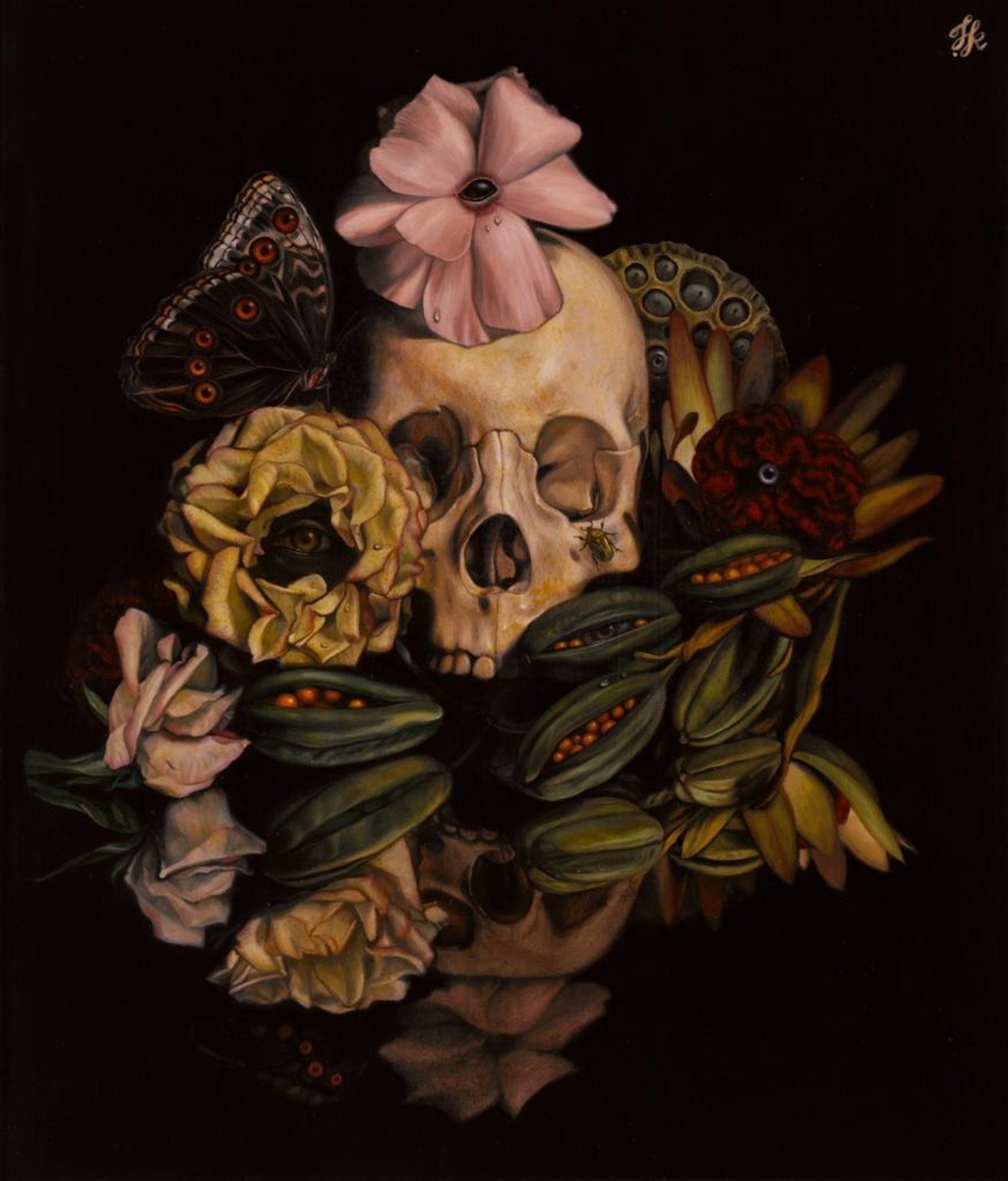
An astrological birth chart, also known as a horoscope, is a blueprint of an individual’s psyche. It reflects the celestial positions at the moment of a person’s birth. The macrocosm of the universe is mirrored in the microcosm of human experience, expressing the ancient Hermetic law of correspondence:
“As above, so below.”
Yet a birth chart does not dictate how we live our lives. It describes potential — a given configuration — not fate. We shape our inner and outer reality, depending on how much we succeed in making the unconscious conscious. Astrology does not predict a destiny, nor is it fatalism; it reveals the seeds we are born with and the patterns through which those seeds seek to evolve. Whether they flourish or wither depends on the level of awareness we bring to them. In this sense, we are the gardeners of our own lives.
In many spiritual traditions this principle is called karma — the law of cause and effect. It does not mean punishment or reward, but simply that every thought, feeling, and action sets something in motion. Yet it is not only which seeds we are given that matters, but how we cultivate them. The same seed can grow into something nourishing or something destructive, depending on the awareness and care with which it is tended. When we remain unconscious, life feels as though it happens to us. As awareness grows, we begin to recognize our role in shaping the reality we experience.
French philosopher Voltaire captured this truth in his famous phrase from Candide:
“Il faut cultiver notre jardin” — “We must cultivate our garden.”
Literally, this refers to the simple act of tending the earth, which connects us to nature’s mysterious cycles of life and death. Symbolically, it speaks to tending our inner garden — our vitality, talents, longings, and needs, as well as our fears, illusions, and limitations — so that our inherent potential can blossom.
The symbolic language of astrology is composed of three main elements: the ten planets, which represent different archetypal dimensions of the human psyche; the twelve zodiac signs, which describe how those energies express themselves; and the twelve astrological houses, which indicate the areas of life where they seek to manifest. These planetary forces are linked through geometric relationships called aspects, which describe how different parts of the psyche interact — sometimes harmoniously, sometimes in tension.
To visualize this, imagine life as a grand stage. The planets are the characters in the play, each embodying a different archetypal energy. The zodiac signs describe the manner in which these characters express themselves. The houses form the stage set, showing where in life the drama unfolds. The aspects reveal the relationships between the characters — who supports whom, who challenges whom — in other words, where tension and incompatibility arise and where mutual support and harmonious interdependence exist.
Astrology therefore offers powerful insights for deepening self-understanding. By becoming aware of our inner actors, we gain the ability to direct our own play and take part consciously in shaping its plot. We move from being unconsciously driven by patterns, projections, and circumstances to becoming active creators and authors of our own lives.
Cultivating the expansion of consciousness takes effort, honesty, courage, and humility. When knowledge ripens into lived wisdom, we find ourselves on a path toward wholeness. In this sense, astrology serves the ancient maxim carved into the temple of Delphi:
"know theyself"